Commercial Roofing Solutions: An Expert Answers the Questions Every Building Owner Should Ask
“Commercial roofing isn’t about selling the most expensive system—it’s about recommending the right solution for the building and the people who depend on it every day.”
Q: What exactly are commercial roofing solutions?
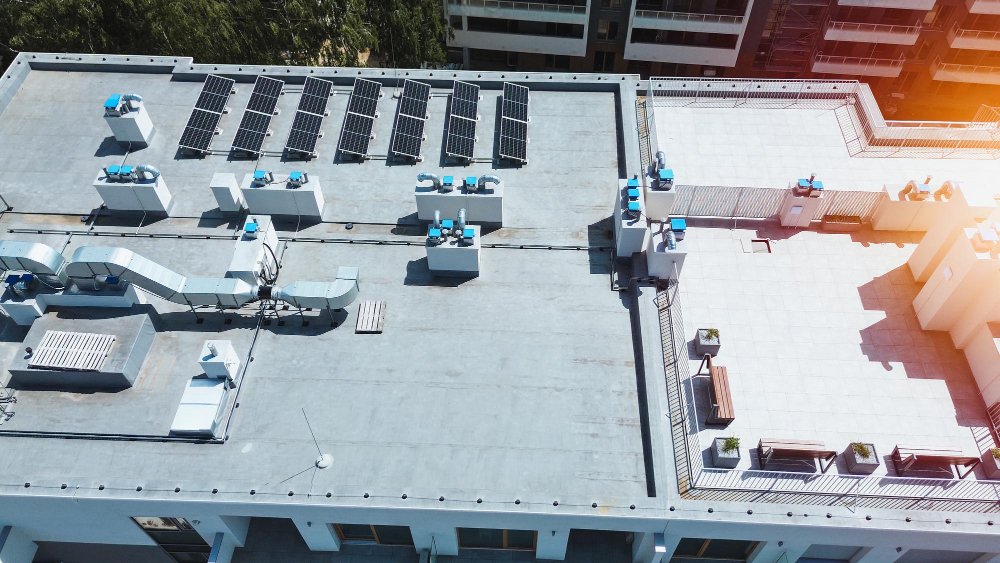
A: Commercial roofing solutions refer to the complete range of services and systems used to protect commercial buildings throughout their lifecycle. That includes roof inspections, repairs, preventive maintenance, roof restoration, complete replacements, drainage improvements, flashing repairs, insulation upgrades, and ongoing maintenance programs. Many people think a commercial roof is simply the waterproof membrane they see from above, but that’s only one part of the system. A properly functioning commercial roof also depends on insulation, flashing, roof decking, edge protection, drainage components, and carefully sealed penetrations around HVAC equipment and other rooftop systems. When these components work together, they form a complete building envelope that helps manage moisture, improve energy performance, and protect the building’s structural integrity.
Expert Tip
Never evaluate a commercial roof by looking only at the membrane. Ask how drainage, flashing, insulation, and rooftop penetrations will perform together over the next twenty years.
Q: How do you determine whether a commercial roof needs repair or replacement?
A: The first step is always a comprehensive roof inspection. Every commercial building is different, so we avoid making recommendations before understanding the roof’s actual condition. We’re evaluating several factors at the same time:- The age of the roofing system.
- The condition of flashing and roof penetrations.
- Drainage performance.
- The condition of insulation beneath the membrane.
- The frequency and severity of existing leaks.
- The building owner’s long-term plans.
“A roof replacement should solve tomorrow’s problems—not simply repair today’s leak.”
Q: Which roofing systems perform best on commercial buildings?
A: There isn’t one roofing system that’s automatically the best for every building. Each material has strengths depending on how the property is used. TPO remains popular because of its reflective surface and energy efficiency. PVC performs exceptionally well in facilities exposed to grease or chemicals. EPDM offers outstanding flexibility for large roof areas, while Modified Bitumen and Built-Up Roofing continue providing excellent durability for buildings with frequent rooftop traffic. The important point is matching the roofing system to the building rather than selecting materials based solely on price. That’s why experienced contractors spend time understanding drainage, rooftop equipment, future maintenance requirements, and structural conditions before recommending a particular roofing solution.
Expert Tip
The lowest installation price rarely represents the lowest lifetime cost. Long-term performance almost always delivers the greatest value.
Q: What installation mistakes shorten a commercial roof’s lifespan?
A: Most premature roofing failures aren’t caused by defective materials—they’re caused by overlooked details during installation. Commercial roofs perform as complete systems, so every component must work together exactly as intended. Some of the most common issues include improperly installed flashing, poor drainage planning, inadequate sealing around roof penetrations, incorrectly installed insulation, and shortcuts taken during membrane installation. Individually, these problems may appear minor, but over time they can allow moisture to enter the roofing system and gradually compromise its performance. Another common mistake is focusing only on today’s construction needs without considering tomorrow’s maintenance requirements. Commercial roofs often receive additional HVAC equipment, solar installations, or communication systems after construction is complete. A roofing system should be designed with enough flexibility to accommodate future changes without sacrificing waterproof integrity.“Quality roofing isn’t created by one great material—it’s created by hundreds of small details executed correctly.”
Q: How important is preventive maintenance after installation?
A: Preventive maintenance is one of the most valuable investments a commercial property owner can make. Even the highest-quality roofing system benefits from regular inspections that identify developing concerns before they become expensive repairs. A professional maintenance program typically includes checking flashing, inspecting membrane seams, clearing roof drains, evaluating sealants, documenting roof conditions, and assessing the impact of severe weather. These routine inspections often uncover small issues while they are still simple and inexpensive to correct. Preventive maintenance also supports better long-term budgeting. Rather than reacting to unexpected leaks or emergency repairs, property owners can plan maintenance activities and future capital improvements based on the roof’s actual condition.
Expert Tip
Schedule comprehensive commercial roof inspections at least twice each year—typically in the spring and fall—and always after severe storms or major weather events.
Q: What should property owners look for when hiring a commercial roofing contractor?
A: Experience, communication, and transparency are far more important than choosing the lowest estimate. A qualified contractor should begin with a detailed inspection, explain available options clearly, and recommend solutions based on the building’s specific needs rather than a one-size-fits-all approach. Property owners should also look for contractors who understand the entire building envelope. Commercial roofing is closely connected to drainage systems, flashing, insulation, ventilation, and structural performance. Addressing only the visible roofing material without evaluating these related components often leads to recurring problems later. For businesses seeking dependable commercial roofing services in Northern California, choosing a contractor who provides ongoing support after installation can be just as valuable as the quality of the installation itself. Long-term maintenance, routine inspections, and clear communication help protect the investment for years to come.“The best roofing partner isn’t the one who simply installs a new roof. It’s the one who helps that roof perform successfully for decades.”